Table of Contents

Netherlands Fireworks Ban: Impact on New Year’s Celebrations 2026

New Year’s Eve – for many, a celebration full of emotion, lights, and loud bangs. But that is exactly what is set to fundamentally change in the Netherlands starting with New Year’s Eve 2026/2027. After lengthy political debate, the Dutch parliament has passed a nationwide fireworks ban for private individuals. The reasons: safety, environmental protection, and animal welfare.

Was bedeutet dieser Schritt für die Niederlande – und könnte er auch ein Vorbild für Deutschland sein? In diesem Beitrag werfen wir einen Blick auf das neue Gesetz, die Reaktionen aus der Bevölkerung und vor allem auf zukunftsweisende Alternativen wie die Drohnenshows von Flyingstars, die schon heute zeigen, wie ein modernes und nachhaltiges Silvester aussehen kann.

Introduction to the Ban

A milestone for greater safety and sustainability has been set in the Netherlands: starting New Year’s Eve 2026/2027, private individuals will no longer be allowed to ignite fireworks. The ban was passed by both chambers of parliament with a large majority.

In recent years, there were repeated attacks on police officers, firefighters, and emergency personnel during New Year’s Eve, which led to years of heated debate in parliament. There had long been no consensus in the Dutch parliament, and the issue was fiercely contested. The red-green coalition, together with the Animal Protection Party, introduced a legislative proposal which eventually passed in the lower house. The right-liberal governing party VVD, initially opposed, dropped its resistance in the spring and agreed to the ban. Several European countries already have strict regulations or outright bans on fireworks. The new Dutch regulations now also prohibit the setting off of consumer fireworks. This political move addresses ongoing problems and sends a strong signal for improved public safety.

The background includes increasing violence during New Year’s Eve – especially against emergency services – as well as massive environmental and health concerns caused by fireworks. Emergency workers were frequently attacked with fireworks, resulting in injuries and even deaths. Many people were seriously harmed by powerful firecrackers, especially police, firefighters, and emergency personnel on duty during New Year’s celebrations. In some places, fires were deliberately set to escalate the danger and aggression.

The Dutch fireworks ban is part of a growing trend across Europe: traditional pyrotechnics are increasingly under pressure.

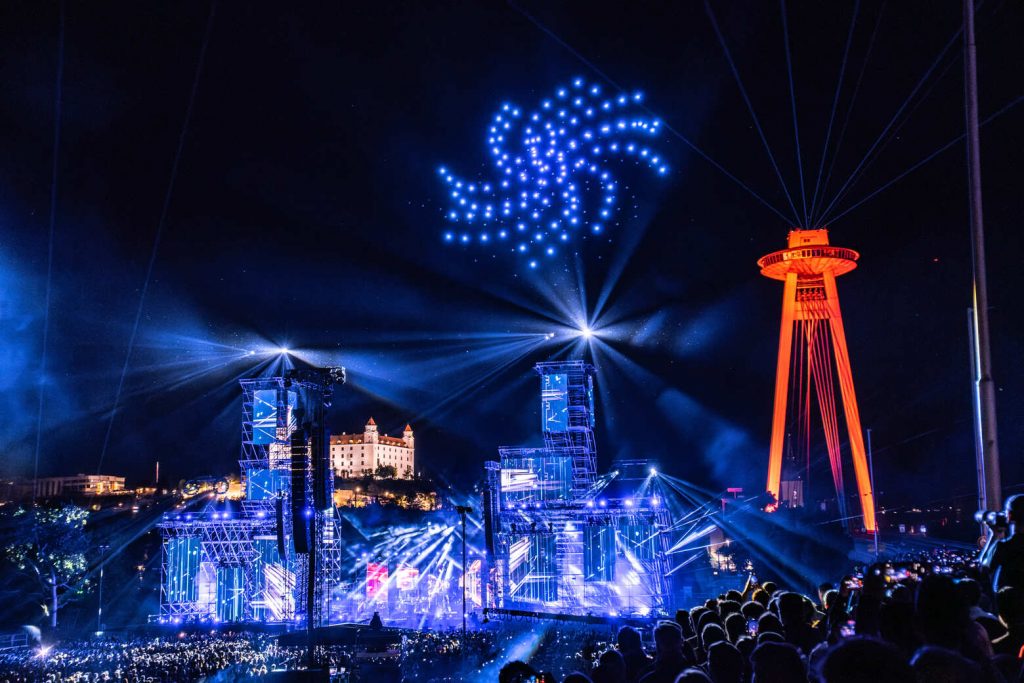
A drone show at new years eve

Background and Reasons for the Ban

Numerous stakeholders – including emergency doctors, fire associations, municipalities, environmental and animal welfare organizations – have been calling for a ban for years. These groups have continuously advocated for stricter regulations. Police unions, municipalities, animal and environmental advocates have long called for a comprehensive ban to improve safety and prevent damage. In recent years, dangerous situations and calls for a ban regularly occurred during New Year’s, often triggered by illegal fireworks brought in from abroad.

Only after the right-liberal VVD abandoned its blockade in spring 2025 was the red-green and Animal Protection Party’s legislative proposal able to pass.

The main objectives:

  • Protection of police, fire and rescue services

  • Reduction of injuries and fires

  • Environmental protection and reduction of fine dust

  • Consideration for animals and reduction of noise pollution

Exemptions and Permits

The new fireworks ban in the Netherlands is not absolute in all areas. While private fireworks are generally prohibited starting New Year’s Eve 2026, central firework displays organized by municipalities remain allowed. These public events are intended to allow people to continue celebrating New Year’s Eve together – but under controlled and safe conditions.

Private individuals who still wish to set off fireworks will need to obtain an official permit. This applies to both traditional fireworks and firecrackers for New Year’s. The permit requirement ensures better oversight and enhances safety for everyone involved. It also aims to prevent harm caused by uncontrolled fireworks.

An important aspect of the new law is cracking down on the illegal fireworks trade. In the past, individuals could often buy powerful fireworks legally in Germany and bring them to the Netherlands, even though the sale and ignition of such fireworks were already heavily restricted or banned. The new law closes this legal loophole to significantly reduce the number of illegal fireworks and the associated risks.

Impact on the Population

With the ban on private fireworks, the New Year’s Eve experience in the Netherlands will change fundamentally. The ban also applies to private gatherings and not just public events, meaning fireworks will no longer be part of private celebrations.

Many people understand the rationale. According to surveys, over 70% of Dutch citizens support the ban or even want stricter regulations.

Others see it as the loss of a cultural tradition. However, the majority acknowledges: safety and sustainability are more important today than ever.

Impact on the Economy and Tourism

The fireworks ban in the Netherlands has not only societal but also economic consequences. Firework sales were previously a significant economic factor, especially in regions bordering Germany. Many Dutch citizens used to buy their fireworks in Germany due to already strict regulations in the Netherlands. With the new ban, this cross-border trade will be severely limited, resulting in noticeable revenue losses for retailers and importers.

At the same time, new opportunities emerge: municipalities could generate revenue through centralized firework displays or innovative alternatives such as drone shows. The new permit requirement for private fireworks could also open up business models, such as organizing approved fireworks events for individuals or companies.

Tourism in the Netherlands may also be affected by the ban. Traditional fireworks displays had attracted many visitors to the country. It remains to be seen how the ban will influence the appeal of New Year’s Eve. However, the Netherlands has a chance to attract tourists with new, sustainable event formats – such as spectacular light and drone shows – and to redefine the New Year’s Eve experience.

What’s Happening in Germany?

A similar ban is also being debated in Germany. A YouGov survey from 2024 shows: more than half of the population supports a general ban on firecrackers.

Several European countries already have firework bans, with the setting off of pyrotechnics being highly regulated or outright prohibited. In some countries, the use of fireworks is completely forbidden to ensure safety and environmental protection. While Germany continues to discuss expanding firework bans, the legal regulations in other countries are often stricter.

Cities like Berlin, Hamburg, and Cologne have already established partial ban zones. Environmental groups and medical professionals are calling for a fundamental change in thinking.

The arguments are similar to those in the Netherlands:

  • Protecting health

  • Reducing waste and fine dust

  • Safety for people and animals

But what are the alternatives? How can we still celebrate an unforgettable New Year’s Eve?

The Future Alternative: Drone Shows by Flyingstars

A particularly innovative and sustainable alternative to traditional fireworks is offered by the company Flyingstars. With spectacular drone shows, they create impressive light images in the sky – completely without noise, smoke, or danger.

Why Flyingstars?

Flyingstars is one of the leading providers in Europe when it comes to choreographed drone shows. Whether for New Year’s, city festivals, concerts, or corporate anniversaries – the shows by Flyingstars combine technology, art, and emotion in a fascinating way.

Benefits of Flyingstars drone shows:

  • Environmentally friendly: No fine dust, no plastic or paper waste

  • Quiet: Ideal for families, animals, and inner cities

  • Customizable: Logos, text, animations – anything is possible

  • Safe: No explosion hazards or injuries

  • Sustainable: Reusable technology, resource-friendly, future-ready

Whether 200, 500, or over 1,000 drones – Flyingstars uses state-of-the-art flying drones with LED technology, GPS control, and musical accompaniment.

A New Year’s Eve with a Flyingstars show doesn’t just replace fireworks – it elevates the experience to an entirely new level.

Public and Permitted Events in the Netherlands

While private fireworks are banned starting in 2026, cities can still host official displays – including with new technologies such as drone formations.

Some communities are already shifting toward light-based events instead of loud explosions. Flyingstars is ready to support this – with expertise, experience, and spectacular references.

Even for approved large events, stricter rules will apply in the future. The goal remains: safety and sustainability in harmony with modern entertainment.

Conclusion: Time for New Traditions

The fireworks ban in the Netherlands is a bold but necessary step. Society is at a turning point where traditions must be reexamined and new paths pursued.

Flyingstars demonstrates what future New Year’s celebrations could look like: visually stunning, eco-friendly, customizable, and safe.

Perhaps it’s also time for Germany to reconsider – moving away from noise and smoke, and toward magic made of light, technology, and innovation.

Drone shows by Flyingstars

As experts in premium drone light shows, we combine innovative technology with creative concepts to create spectacular visual experiences – whether for sporting events, major city festivals, corporate events, or even private celebrations.

Discover our pricing and book your drone show now.

FlyingStars Logo schwarz-lila-türkis
Auch interessant:
Drone insurance at a glance
How much does drone insurance cost

Insuring a drone in the UK doesn’t have to be costly. Hobby flyers can get public liability from around £17–£25 per year, while compliant commercial policies typically start near £200 and scale with liability limits, operations and kit value. Add hull/equipment cover for accidental damage, theft or fly-away. Remember: for any non-recreational (work) use—or drones 20 kg and above—third-party insurance that meets the CAA’s assimilated EU 785/2004 standard is mandatory.
Mehr lesen »
Grafik von Drohnenshows China
Drone Show China: World Records & Magical Light Shows

Discover how Drone Show China is redefining the night sky with record-breaking drone light shows, AI-powered choreography and ultra-precise 3D formations above cities like Shanghai, Liuyang and Chongqing. Learn about the technology behind these aerial spectacles, why they are safer and more sustainable than fireworks, and how Flying Stars brings the magic of Drone Show China–inspired performances to international events and brands.

Mehr lesen »